

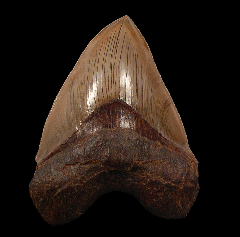
Have you ever imagined holding a piece of one of the most fearsome predators that ever lived? Something real—not from a movie or a museum, but something you can actually own. That’s the thrill of owning a Tyrannosaurus rex tooth. It’s not just a fossil; it’s a story millions of years in the making.
These teeth aren’t just bones stuck in stone. They’re sharp, beautifully preserved relics of a time when dinosaurs reigned supreme on Earth. And for collectors, fossil lovers, and science fans alike, a Tyrannosaurus rex tooth represents the ultimate prehistoric prize.
Let’s explore why this fossil stands out—and why it might just deserve a place in your collection.
Why the T. rex Still Reigns Supreme?
The Tyrannosaurus rex is more than a pop culture icon. It was the apex predator of its time—growing up to 40 feet long and equipped with a bite force stronger than any land animal living or extinct. But the real evidence of its power? Its teeth.
A single Tyrannosaurus rex tooth could measure up to 12 inches long (with the root), shaped like a banana, and built for crushing bone. That combination of size, strength, and design has made these teeth legendary in the fossil world.
Even after 66 million years, these teeth remain incredibly well-preserved—many showing sharp serrations, glossy enamel, and stunning natural coloration.
That’s what makes each discovery exciting, and why they continue to fascinate experts and collectors alike.
Discovering Fossils in the Hell Creek Formation
When it comes to where a Tyrannosaurus rex tooth comes from, not all locations are equal. One of the richest fossil beds in the world is the Hell Creek Formation, which stretches across parts of Montana, North Dakota, South Dakota, and Wyoming.
What makes Hell Creek so special is its fine sediment and exceptional preservation conditions. Over millions of years, the soil chemistry and geological processes helped preserve fossils like teeth in incredible detail.
So, when you see a Tyrannosaurus rex tooth labeled “Hell Creek Formation,” you can trust you’re looking at a fossil with real scientific importance—and exceptional quality.
The origin of a fossil plays a huge role in its value, which brings us to our next point.
What Makes a T. rex Tooth Valuable?
It’s not just size that makes a Tyrannosaurus rex tooth valuable—although a larger tooth often commands a higher price. Collectors look at several key features:
● Serrations: Are they sharp and complete?
● Enamel Quality: Does the surface have a natural gloss with minimal damage?
● Color: Rich browns, blacks, and earthy tones are most desirable.
● Curvature: More curve often means it came from a frontal position in the jaw.
● Restoration: The less repair or filler used, the better.
A complete, natural Tyrannosaurus rex tooth with full serrations and no restoration is incredibly rare—and usually sells fast when it hits the market.
Knowing what to look for helps ensure you’re investing in something that’s both genuine and worth every penny.
The Science Behind the Bite
You’ve seen them in movies—but in real life, the science behind the Tyrannosaurus rex tooth is even cooler. These teeth weren’t just for show. They were built to crush, grip, and rip through prey.
T. rex didn’t slice like other carnivores. Instead, it used its powerful jaws to bite down with more force than any known land animal—about 12,800 pounds per square inch. That’s strong enough to shatter bone.
A fossilized Tyrannosaurus rex tooth still shows those effects today. You might find feeding wear, bite marks, or even damage from fighting or chewing. Every mark tells a story.
The more we study these teeth, the more we learn about how this dinosaur lived—and how it dominated its environment.
Caring for Your Fossil Investment
Buying a Tyrannosaurus rex tooth isn’t just about ownership—it’s about preservation. These fossils are durable but still deserve proper care. Whether you’re displaying it or storing it, here are a few tips:
● Avoid Direct Sunlight: It can damage the color and enamel.
● Keep It Dry: Moisture can weaken the fossil over time.
● Use Display Stands: Acrylic holders help prevent damage and show off the fossil’s best angle.
● Clean Gently: A soft brush is all you need to remove dust.
With the right care, your Tyrannosaurus rex tooth will last for generations, and even appreciate in value over time.
And speaking of value—let’s talk about where and how to buy one.
How to Buy an Authentic T. rex Tooth?
As demand grows, so does the risk of fakes. If you’re in the market for a real Tyrannosaurus rex tooth, here’s what to keep in mind:
● Buy from Reputable Sellers: Look for fossil dealers with a history of quality and transparency.
● Ask for Provenance: A trustworthy seller should tell you exactly where the fossil came from.
● Look at the Details: Color, texture, and enamel all tell you if a tooth is real.
● Don’t Fall for Perfect Teeth: Most real fossils have some wear or damage—it’s part of the story.
At Buried Treasure Fossils, we source only authentic, high-quality fossils, including top-grade Tyrannosaurus rex tooth specimens from the Hell Creek Formation.
Want to own a piece of the past? Browse our certified Tyrannosaurus rex tooth collection now!
Why Collectors Love T. rex Teeth?
From amateur fossil hunters to museum curators, the Tyrannosaurus rex tooth holds universal appeal. It’s dramatic. It’s rare. And it tells a story few other fossils can.
Some collectors are drawn to the scientific side—studying how the tooth formed, how it was used, and what it tells us about prehistoric life. Others are in it for the thrill of owning something that powerful, that ancient, and that real.
Plus, a well-preserved Tyrannosaurus rex tooth makes a striking display piece. It’s a conversation starter. A treasure. And, in many cases, an investment that grows over time.
Owning one means joining a global community of fossil enthusiasts who all share one passion—prehistoric history.
The Emotional Power of a Fossil
There’s something uniquely emotional about holding a Tyrannosaurus rex tooth in your hand. You’re connecting directly with a creature that lived and died 66 million years ago. That’s not just interesting—it’s moving.
Each tooth is unique. No two are exactly alike. Some are long and curved, others short and thick. Some are chipped from feeding. Others show perfect serrations.
Whatever the shape or size, each Tyrannosaurus rex tooth carries a piece of deep time. It’s not just a fossil—it’s a time traveler, a relic of a vanished world.
And that connection is what makes collecting truly special.
T. rex Tooth FAQ – Quick Facts
Q: How rare is a T. rex tooth?
Very rare, especially if it’s complete, serrated, and from the Hell Creek Formation.
Q: What sizes are most common?
Most found teeth are between 2" and 4". Anything over 5" is extremely rare and valuable.
Q: Can I legally own one?
Yes! As long as it’s collected from private land and sold legally, owning a Tyrannosaurus rex tooth is 100% legal in the U.S.
Q: What does a T. rex tooth cost?
Prices range from a few hundred dollars for fragments to tens of thousands for large, premium specimens.
Knowing these facts can help you buy with confidence and appreciation.
Final Thoughts: A Fossil Worth Owning
A Tyrannosaurus rex tooth isn’t just a collector’s item. It’s a bridge to the past, a way to touch a creature that once ruled the planet. Whether you’re buying it for science, art, investment, or passion, it’s a fossil that delivers on every front.
From its rich history in the Hell Creek Formation to its role in reshaping how we understand dinosaurs, the Tyrannosaurus rex tooth is more than just a tooth—it’s a symbol of prehistoric wonder.
Don't miss your chance to own one of nature's most iconic fossils. Explore our collection of authentic Tyrannosaurus rex tooth specimens today.






